Category: Landscape photography

blogGearGear listGear reviewsGröna Bandet

Tips for Hiking the Gröna Bandet: Beatrice Lundbergs Experience

In this interview, Beatrice Lundberg shares her incredible journey hiking the Gröna Bandet, a 1300 km trail through Sweden’s stunning mountain chain. She talks about her challenges, preparation, memorable moments, and the lessons she learned along the way. Whether you’re an experienced hiker or just dreaming of your own adventure, Beatrice’s story is sure to inspire.

Beatrice enjoying a breathtaking view with her trusted choice of gear: the Lundhags Padje Light 60L backpack, purchased from Backpackinglight.se

Who are you, and how would you describe yourself as a hiker?
I was born and raised in Piteå, with a great love for nature, especially the forest close to home. As a child, I spent a lot of time playing in the woods or accompanying my dad and grandfather on forestry work. I’ve always been intrigued by climbing mountains, but my interest in hiking developed during adulthood. Today, I’d describe myself as a “fast-slow” hiker; I like to walk at a brisk pace but also love taking long breaks to fully immerse myself in the nature around me.

What was your biggest challenge during the Gröna Bandet, and how did you handle it?
My biggest challenge during the Gröna Bandet was probably the weather on the day I hiked from Klimpfjäll to Raukaselet via Slipsiken. The wind was extremely strong, and rain lashed sideways across the mountains. I leaned heavily into the wind as I walked, and it was the first and only time during the hike that I felt at risk of getting hypothermic. My goal was to reach Slipsikstugan, a hut about nine kilometers from Klimpfjäll. When I finally got there, I was cold and soaked, but I was able to make a fire, warm up, dry off, and take a long lunch break while the storm raged outside. I had company from a few other hikers, and we talked about staying overnight. However, as the wind and rain began to subside, I decided to continue after some rest and made it safely off the mountain six kilometers from the hut.

Which part of the route was the most memorable, and why?
It’s incredibly hard to pick one specific section because I experienced and look back on the whole journey as a unified adventure. But if I had to choose, I’d say the first part of the Gröna Bandet, from Treriksröset to Abisko, was the most memorable. The weather was absolutely stunning, the scenery was breathtaking, and the infrastructure along that part of the Nordkalottleden was excellent. It was also great fun to share that section with my partner. Reaching Abisko was a significant milestone for me—it felt surreal that I had managed to hike there from the far north! That stretch set the tone for the journey and made continuing southward both possible and exciting.

How did you prepare physically and mentally for the hike?
I trained both cardio and strength during the winter and spring. The cross-country skiing season really helped improve my base fitness. I also went on a few shorter trips with my gear during spring to get used to carrying and handling it, as well as to evaluate if I wanted to make any changes before setting out. I also tried to walk more in my daily life instead of biking to places. Mentally, I thought a lot about how I’d handle being alone and deal with potential challenges along the way. These reflections were practically useful and also helped me show kindness to myself during the hike.

What gear was the most valuable for you, and what would you leave behind next time?
On chilly evenings, my Rab Xenon Jacket was incredibly valuable. Another standout item was my Kula Cloth—it worked perfectly and is a great tip for anyone peeing outdoors without needing to carry toilet paper. I also brought a CuloClean bidet, but I never ended up using it, so I’d leave that behind next time.

How did you manage food and water along the way?
I dried my own food for about half of the hike and shipped it to resupply points in Abisko, Ritsem, and Ammarnäs. For the rest of the hike, I bought food as I went, usually enough for three to five days at a time. This worked really well for me since I passed more small shops and stores the farther south I went. I drank water directly from streams between Treriksröset and Ammarnäs. South of Ammarnäs, I used a water filter, which I was very grateful to have on several occasions.

Were there moments when you considered quitting, and what made you keep going?
There wasn’t a single moment when I seriously considered quitting. However, my motivation wavered the day I left Hemavan heading south. I had just parted ways with two friends who had joined me from Ammarnäs to Hemavan, and those days had been so wonderful after hiking alone for a while. Saying goodbye was tough, and the weather forecast promised terrible conditions for the coming week. On top of that, I had a long day of road walking ahead of me. I started questioning what I was doing and why. What kept me going was primarily a sense of respect for myself and my dream of completing the Gröna Bandet.

How did this hike affect your view of nature and outdoor life?
My perspective on Sweden’s nature has broadened significantly after seeing the entire mountain range with my own eyes. It was fascinating to slowly experience how the high peaks of the north transitioned into the rolling open landscapes farther south. Returning to my regular life in a mid-sized city, with all its noise, light, and constant stimuli, was surprisingly challenging after having nature as my everyday environment for 55 days. Strangely, I feel more distant from nature now than I did before hiking the Gröna Bandet. Regarding outdoor life, the hike made me deeply grateful for the infrastructure, volunteers, and dedicated people who make Sweden’s rich outdoor culture possible.

What do you wish you had known before starting the Gröna Bandet that would have made the journey easier?
I wish I had known how long my daily hiking distances would be. That knowledge would have allowed me to relax a bit more at times since I actually had much more time than I initially thought to reach Grövelsjön.

How did the weather shape your experience, and how did you prepare for different conditions?
The weather influenced my experience every single day! Sunny days often felt lighter and more energizing. I would often take breaks and enjoy the surroundings, and everything seemed to go smoothly without much effort. Of course, sunny weather required extra care to avoid sunburn, so sunglasses, a cap, and SPF 50 sunscreen were my best friends. Rainy days required more mental grit and planning to get through but had their charm—for example, choosing to sleep indoors and warm up by a fire after a wet day. Before the hike, I prepared in several ways. I brought a wind jacket, rain jacket, rain pants, and waterproof socks. My sleeping bag and a change of clothes were stored in a sturdier waterproof bag, along with my electronics. The rest of my gear was packed in other dry bags, and I used a liner bag inside my backpack instead of a rain cover. During the hike, I consumed weather reports like never before!

Beatrice tent, a Hilleberg Niak

What advice would you give to someone considering hiking the Gröna Bandet?
You can find many great tips about the Gröna Bandet from other hikers online—this was invaluable for me during the planning stage! But don’t overthink it or worry if you haven’t spent ages preparing—adventure is out there waiting for you, and you’ll figure out a lot along the way!

If you’d like to see my packing list, you can find it here on Lighterpack: https://lighterpack.com/r/ynl25l.

If you’re interested in hiking the Gröna Bandet, a great resource to start with is the official website: Vita Gröna Bandet. This site provides detailed information about the trail, including maps, tips, and other essential resources. You can also connect with other hikers and find helpful advice for planning your journey. For additional support, consider reaching out to local outdoor gear shops like Backpackinglight.se for expert recommendations on equipment and preparation.

backpackingblogcampingDestinationsGoing Lighter

Ett slitsamt jävla äventyr! Samuel Leaben Rosén berättar om sina 5 Bandet turer!

Avnjuta lite fräscha skoterspår i början på Kungsleden.

Det finns flera olika sätt att förbereda sig inför Vita eller Gröna Bandet. En del dissekerar varje söm i sin packning, planerar matdepåer och väger varje pinal som ska med. Andra packar det man har och det som får plats i ryggsäcken, skippar mat depåerna och bara ger sig ut, utan att tänka så mycket på vad grejerna väger. Samuel Leaben Rosén har varken en packlista, eller något lättviktstält att stoltsera med. Under sina 5 turer genom den Skandinaviska fjällkedjan har han bara vägt sin ryggsäck en gång och då vägde den ca 30 kg, utan mat, dvs 15-20 kg mer än många andra som vi har intervjuat och vandrat samma sträcka. Med facit i hand så är denna story kanske inget som hör hemma på varken Backpackinglight.se eller Ultralight and Comfortable eller någon annan lättviktsblogg för den delen. Men när jag intervjuade Samuel så slog det mig att vi alla är olika. En del har varken tid, ekonomin eller intresset att nörda ned sig för att sen kitta upp sig med de lättaste prylarna. Om jag går till mig själv så var det först när jag fick testa lättare utrustning som jag förstod det stora värdet i det och hur mycket det faktiskt maximerade min totala vandringsupplevelse. Jag hade inga problem att bära på 30 kg men det tog på och jag var ofta helt tömd på energi när jag kom fram till lägerplatsen efter ett pars mil vandring. Men att göra det i 130 mil, kräver yx-pannben och en vilja utöver det vanliga, något som jag inte skulle råda någon att göra. I slutet på denna artikel kommer jag försöka förklara fördelarna men att minska ned sin bärvikt och vad som händer när man bantar från 30kg till 15 kg, inte bara att du rör dig smidigare utan faktiskt försöka påvisa den “ränta på ränta” effekt som faktiskt uppstår. Fram tills dess, här är Magnus egna story:

Kul att du vill vara med, berätta för läsarna, Vem är 5-bandsmannen Samuel Leaben Rosen?

-Tänker på det ibland och jag vet inte riktigt. En småcharmig karlslok i 40-årsåldern utan högt flygande planer eller stora ambitioner, kanske. Nåt sånt hade jag förmodligen skrivit på en eventuell tinder profil. -Om någon tycker jag är mer, mindre eller något annat, måhända att de har rätt. Jag varken vet eller bryr mig. 5-Bands mannen. Det är förmodligen aldrig någon som kallat mig det, inte ens jag själv. 5-sekunders mannen har jag väl hört några gånger, det är förvisso en helt annan historia. Det som drivit mig att trampa och skida genom vår svenska fjällvärd är mestadels slumpen. Att jag dessutom för ungefär 5 år sedan inte har ett heltidsarbete utan drängar runt som en kommunal timvikarie har gett mig både tid och frihet att göra lite vad jag vill.

Hellre stå på en sten och spela ball än att sitta på den och böla.

Berätta om dina turer?

-Första gången skedde genom att en god kamrat föreslog att vi skulle köra Gröna bandet ihop. Jag tänkte väl då: -Visst, varför inte! Att min kamrat sedan fick förhinder att hänga med, det där med att livet kommer emellan, stoppade inte mig. Som jag skrev innan så har inte jag riktigt samma liv, åtaganden eller ansvar. Jag var fortfarande inställd på att dra iväg och hade sett till att inte knyta upp mig, lova bort mig eller planerat in något annat. Så efter att kräva skjuts till Grövelsjön av tidigare nämnd kamrat så gav jag mig iväg.

-Andra gången hade min kamrat lyckats pussla och planera bättre i sitt ansvarsfulla och upptagna leverne att han kunde hänga med. Vi hade ju sagt att vi skulle göra detta tillsammans och det var något både han och jag ville göra. Så vi fick vårat äventyr, ett år försenat men tillsammans.


-Tredje gången och första vita. Det går ju att göra det på skidor också, undra om jag klarar av det? Det går säkert att fundera över och komma fram till ett realistiskt svar. Eller, så kör jag bara och ser om det går, och det gjorde det!

-Fjärde gången och andra skidturen. Två gröna, två vita. Det låter bra, det är viktigt med balans.

-Femte gången och tredje gröna. Via fejjangruppen eller hemsidan blev jag varse att det introducerades en special patch för de som gjort det fem gånger. Jag kunde inte låta bli att tänka: Den patchen vill jag ha, och så blev det också.

Ett par trötta skidfötter. Detta var dagen innan jag besökte Alko i Kilpisjärvi. Något senare infann sig ett vansinne av smärta kryddat med brännvin. Detta ledde till att jag drog min mora och knivade upp mina pjäxor för att få lite tåutrymme. Fick fixa dem med en uppskuren drybag på kvällen för att slippa få in snö i dem, rätt val.

Vad är det som driver dig till alla dessa långturer?

-Det var ju såklart någonting som fick mig att fastna för slitiga långturer under och efter den där första vandringen. Grunden i utmaningen är något som är väldigt tilltalande för mig i sin enkelhet. Ta dig därifrån till dit och gör det för egen maskin. -Fan så skönt. Det är givetvis jobbigt, jävligt och jävligt jobbig! Men att varje dag veta exakt vad som ska göras. Det ska gås eller glidas, beroende på årstid. Denna ljuva enkelhet! Att det dessutom innebär att jag får vara ute och uppleva naturen och allt hon har att bjuda på. Jag upplever henne som mer sträng än öm. Om någon undrar.

Början på slutet någonstans i Norge.


Berätta om dina Bandet minnen?

-Finns några att välja på. De som har berört mig mest är möten med främlingar som hjälper en, så häng med och minns dem med mig:

Första Gröna Bandet turen.

-Oerfaren och småvilsen i Jämtlands-vischan och det smyger sig upp någon gammal Toyotahistoria (kan ha fel här, är inte så bra på bilar) längst vägen. I den sitter en vithårig farbror och undrar om jag ska förbi bystugan. Jag saknade vetskap om både bystuga och farbror, så jag svarade väl något i stil med: Ehh,… Ok! -Det var så jag träffade Stig för första gången. Ett väldigt bra möte och ett minne jag ska vårda lika ömt som en skål fylld till bredden med nymjölkad mjölk.

Under Gröna Bandet nr 2 så finns det en som jag ibland tänker på.

-En man vi träffade i Valsjöbyns lokala bodega. Vi var därinne för att handla något vi behövde men mestadels unn vi ville ha. Vi frågar expediten om det måhända går att köpa piprensare, vilket tyvärr inte gick. Efter några minuters scrollande i butikens hyllor så dyker mannen upp. Med sig har han en påse piprensare och erbjuder oss dem. Utan att be om något i ersättning. Den här mannen har alltså överhört vår förfrågan, åkt hem för att hämta piprensarna och sedan tillbaka för att skänka dem till oss. Bara för att vara snäll. Vackrare än alla utsikter sammanslagna.

Första skidturen.

Ett ganska kargt välkomnande till Jämtland denna gång. Strax efter Helags så stormar det på ordentligt vilket leder till en bortblåst skida. Så efter en slitig fjälltur till fots in i Vålådalen. Skidlös, skitsur och ledsen stannar jag kvar över natten efter att ha pratat med tjejen som kan ha varit sportchef. På förmiddagen så har sportchefen blivit påverkad av mitt slitna anlete och ledsna hundögon. Hon har funnit i sig hjärta, viljan att hjälpa mig fortsätta på mitt äventyr genom att iordningställa en hyrskida åt mig. Så rart så jag blir nästan tårögd.

Senare samma skidtur kom jag till Raukasjö och hade då pulktrubbel istället. Återigen med detta slitna anlete och ledsna hundögon fick jag hjälp av Tommy att ordna pulkans underrede. Väldigt snäll man, gubbsträng men snäll.

Vid en finländsk autiotupa, fast i Finland. Jävla Covid.

Andra skidturen.

En tur som gick bra, bortsett från allt covid-kaos som världen drogs med. Jag träffade Kent i Rötviken. Jag gillar Rötviken för att det heter just Rötviken, men vem gör inte det? Jag gillar Kent för att han är skön. En klassisk urstockholmare, kört taxi och nu sadlat om till att arrendera camping.

Den sista färden. Eller den senaste i alla fall.

-Efter att ha traskat genom Tärnaby, denna gång på väg söderut. Här har jag slängt upp tältet på någon form av vändplats avsedd för skogsmaskiner, längst med en grusväg, då en kvinnlig bilist plötsligt stannar till och undrar om jag är ute och “grönabandar”, vilket jag var. Efter några tips om tältplatser och allmänna trevligheter undrar damen om jag behöver något. Jag tänker, varför inte, jag kan väl lika väl fråga. Du har ingen sprit kanske? -Undrar jag. Nej tyvärr, svarar hon. Men hon har knappt hunnit avsluta svaret innan hon utbrister: -Nej, vänta! Efter ett kort rotande i bilen har hon lyckats trolla fram en flaska Baileys som hon glatt avvarar. En trevlig och oväntad present!

Någon halvkilometer från Sälkastugan kunde jag sitta vid tältet och glo på andra fjällfräsare. Lite ensamhetens sällskap. Det sällskap jag gillar.

Hur ser din packning ut och hur förbereder du dig inför en långtur?

-Jag är ganska oplanerad vad gällande packning, vilket leder till att jag ofta bär en ganska tung ryggsäck. Har en snigelmentalitet, är tung och långsam då jag bär hela huset på ryggen. Man måste ju vara redo för vad som kommer! Det är dessutom ofta mat och onyttigheter som väger mest och det kan jag alltid äta upp om jag vill bära lättare. Utöver allt som är nödvändigt. Mat, tält, sovsäck, liggunderlag, kök, ombyten etc. så tycker jag det är väldigt skönt att ha med lurar till telefonen så jag kan lyssna på musik ibland. Någon typ av rast sko är något som jag gillar att ha med, är det inte vinter och snö så använder jag en badsko från Lidl och är det skidåkning så har jag en bivy boot.

-En pissflaska är heller inte så dumt, särskilt på vintern. Finns säkert många som håller med mig och kan känna igen sig. De där gångerna vi legat i våra tält, pissnödiga, sura och våndats av en fruktansvärt stark ovilja att ge oss ut i rugget utanför den skyddande tältduken. En pissflaska löser de problemen, i alla fall för den penisbärande delen av befolkningen. Vet inte om det finns andra lösningar.

En uppgiven en efter 500 m uppför Jakobshöjden. Vad i helvete har jag gett mig in på? Om jag inte missminner mig, var det något åt det hållet jag tänkte.

-Efter att ha bestämt att jag ska iväg någonstans så går jag några dagar och tänker mig att jag är ute. Då är det lätt för mig att visualisera vad jag vill ha med mig. Kommer jag på någonting utöver grunderna så lägger jag det på minnet, sen kvällen innan jag ska dra så slänger jag ihop det jag tänkt mig.

-Jag har bara vägt min packning en gång. För att jag vet att den alltid kommer vara så onödigt tung, så jag vill inte veta. Lite som när en drar sig för att öppna en faktura som kommer vara smärtsamt för plånboken.

Den gången jag vägde den var på sista bandetturen, när jag kom ner till Abisko. Så från Kilpisjärvi till Abisko, vilket tog en dryg vecka. Då vägde den 28kg. Så några kilon över 30 gissar jag att den väger vid start.

Jag skickade ut depåer under den första Vita Bandet turen. De andra gångerna har jag handlat längst vägen. Då har det blivit vid Åre, Gäddede, Klimpfjäll, Valsjöbyn, Tärnaby, Hemavan, Ammarnäs, Jäkkvik och Abisko. Beroende på vilken väg jag tog och om jag behövde fylla på. Har föredragit detta eftersom jag då med säkerhet vet att inget kommer försvinna med posten.

Nyshoppat unn från Klimpfjäll avnjuts i tralligt väder och gott sällskap.

Utöver det har det inte funnits minsta skam att rota igenom efterlämningar i de fjällstugor som besökts. Eller att unna sig en frukostbuffé om den möjligheten funnits.

Några nya turer inplanerade?

-Absolut. Jag kommer dra iväg på något mer av en rekreations tur i juli/augusti. Har inte bestämt riktigt var, men blir till fjälls i alla fall. Och tänkte då ta med min packning till er på Backpackinglight.se så får ni kitta upp mig med lättare prylar, så ska jag skriva sen om skillnaden.

Med detta så vill jag tacka för din medverkan Samuel och ser fram emot att göra dig lättare till din nästa tur!

Från 30 till 15 kg

Har som sagt lovat att hjälpa Samuel att gå ned i bärvikt till sitt kommande äventyr är att minska hans bärvikt från 30 kg till ca 15 kg. Så en spännande fortsättning följer! I Nedan bild har jag beskrivit vad som händer när du avlastar ryggen med 15 kg och vilka fördelar det ger. Fler tips och motiv till att vandra lättare hittar du här: 5 lätta tips.

Hoppas ni tyckte artikeln var givande. Kom gärna med kommentarer eller frågor. Mvh

Marcus 

backpackingLandscape photographyPhotographyTravel Photography

Hiking with the Mamiya 7ii

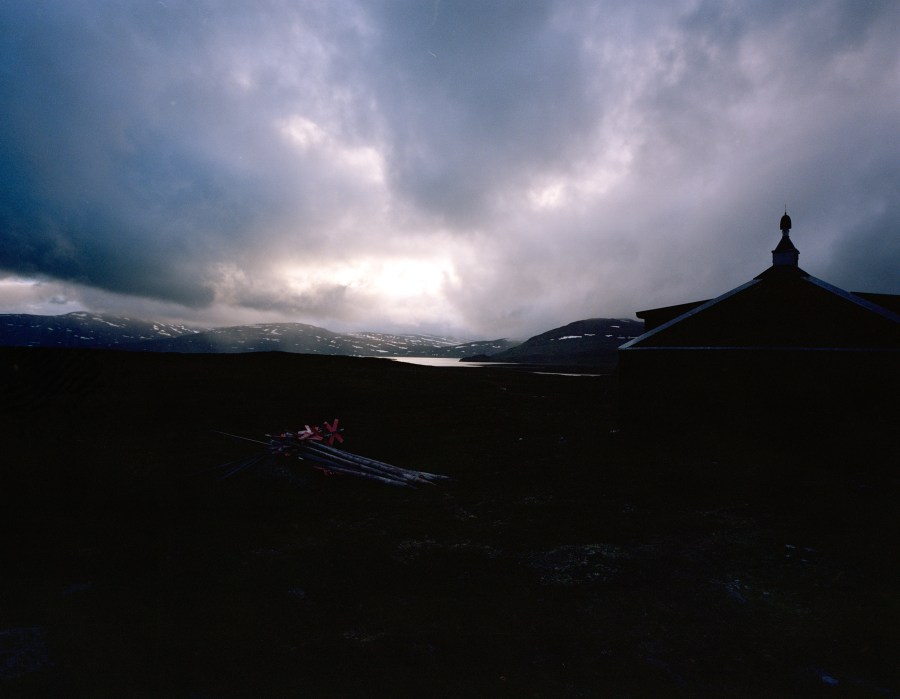
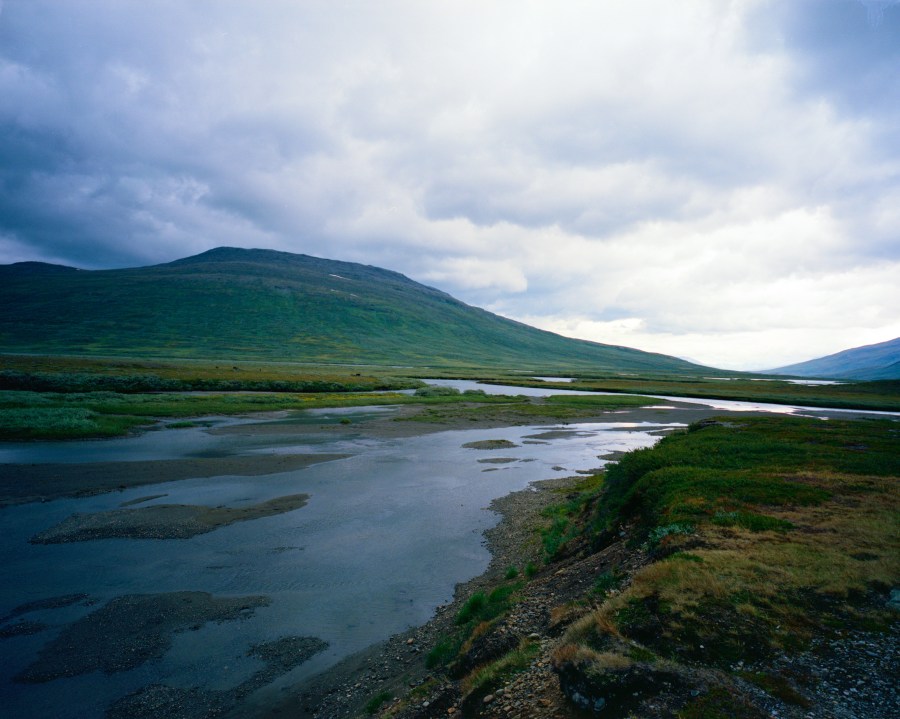
A friend and I recently took a 7 day, 165 kilometer walk in Northern Sweden. Starting at Ritsem and walking along the Padjelantaleden then moving off to Nordkalottleden and finishing in Kvikkjokk. This isnt going to be a post about the hike itself, but rather about my choice to bring the Mamiya 7ii +43mm lens and a ton of film. The film I used for this trip was varied but mainly Fuji Velvia 100 and Portra 160, 400. All film processed myself at home.

As some of you might know from previous post I have been an avid analog photographer (hobby) forever. I never went total digital as I always preferred the look of analog. On this particular trip I wanted to bring my analog camera as it had been years since I actually went hiking with an analog camera. Though, because I am a lightweight backpacking nerd, its hard to justify 2 kilos of extra gear that can only take still photos. While my total backpacking gear weight with food for the entire trip came in at 11kg, with the camera that pushed everything to just shy of 14kg.

It really was an internal debate for weeks whether or not I would bring the camera and what camera for that matter. In fact, just before boarding the train to northern sweden, I was still changing out my different pre-packed cameras and camera cubes in my backpack. My biggest issue was mainly with volume. While 14kg would not kill me, and I knew after a few days of eating the food weight in my backpack, my kit would be under 10 kg in no time. It was the volume of my pack that bothered me. I normally dont need more than a 40 liter backpack, however, with the mamiya and a packing cube I would need a 70 liter pack. This sucked.

However, while debating whether to bring my Ricoh GR21, Nikon F5, Canon f-1 or Mamiya 7ii, I ended on the only choice that would make any sense: the Mamiya 7ii. WIth its built in meter, super sharp lenses and lightweight, it was a no brainer. Though, I do regret not bringing my 150mm lens for the Mamiya, as 43mm is arguably to wide for most landscape applications. (for the kind of photos I take). This choice was mainly due to weight, one lens was enough.

To protect my camera I kept it in a Wandrd camera cube, in a plastic ziploc bag, the bag filled with these gel packs that keep moisture out. This seemed to work really well as I didnt have fog or moisture in my camera at all despite several days of hard rain. I did have a tripod, which I used both for video and for photography, my tripod weighed about 400grams and gives about 150cm of height.

In the end I think the extra weight and effort was worth it. Though I think had I brough my 150mm lens I would have gotten a lot more quality shots – as it was, I think its hard to capture the “vastness” of an area with such a wide lens that I brought. Wide lenses have a tendency to “squish” and area into a small frame, so even large alpine like mountains, look like little hills. Live and learn.

Anyway, here are a few more shots from the Mamiya 7ii + 43mm lens (I didnt bring viewfinder for 43mm lens as I find its not really necessary). Scanned with Silverfast and no additional editing

Landscape photographyPhotographyTravel PhotographyZambia

Life in Zambia

Some of you may not know, but since about mid February the family and I moved down to Zambia to adopt a beautiful little boy named Richard. Life here is certainly different, and having two son’s instead of one is also a big change. We live in Lusaka on the southern part of town in an area called Chalala. It’s a nice, quiet area of town that is rather close to the orphanage where Richard was living.

This hasn’t been a trip of wondering safaris and adventure. For the first month we only had permission to come by and visit Richard. So, everyday for a month we drove back and forth to visit Richard. Now, after two months we have full custody of Richard and he seems to really like being with us. We are now finally starting to be able to explore, unfortunately I am a bit out of action at the moment with a broken rib after falling hard on a slippery floor.

However we have made a few outings, with the most spectacular being Livingstone and Victoria falls. Livingstone is the town that hosts Victoria falls on the Zambian side of the border.

On the first day of being in Livingstone it was raining heavily – so instead of heading to Victoria falls we decided to do Musi-oa-Tunya national park for the day. It was an incredible journey where all the animals were out enjoying the rain. Giraffes, Elephants, Water buffalos and monkeys among many more.
There is an elephant there… I realise that my photography sinks a few notches when my family is with me. Perfectly natural I suppose.
Victoria falls from a distance.. Caught on the Canon 6d mark ii with 16-35 2.8 lens.. To say that the falls are impressive is an understatement.
This time a little closer – If you look closely we are drenched – it is not raining, this is from the mist of the falls. The bridge has a river of mist flowing and the entire hillside is like walking through a drowning shower on full blast.
Richard showing off how wet he is from the Victoria falls mist.
Alexander yells out at me “daddy look, take some pictures I’m going to pose…”
Looks perfectly safe.. ….. Zambia!
The minimum wage in Zambia is about 100 usd a month. While this won’t get you more than barely a candy bar in Sweden, in Zambia it’s enough to eat three meals a day on, have a home and cell phone. It’s not luxury, but it’s not death by starvation.
Walking down the street in livingstone
backpackingblogLandscape photographyPhoto reviewsPhotography

Camera gear over the years

Over the years I have gone through dozens of cameras. Different purposes, but mainly because I have a serious problem with GAS when it comes to cameras. I have become a freak with gear, much like backpacking gear, I go through gear until I find what works best for me in the variety of situations that I use my gear in. A quick run down follows:

1st camera and one I’ve used until about 2004 – Canon AE-1 Program with a 35-70mm zoom lens. While it quit being my daily camera in 2004, I actually still use it even today. It’s not really my camera, which is probably why I’ve never gotten rid of it. It’s officially my moms camera that she bought back in the early 80’s new. I have used that camera like crazy and love it. Unfortunately, film is not very practical for everyday use so I eventually went over to some Kodak digital camera that had an amazing 5 megapixel camera.

IMG_0296

I used that Kodak for a couple of years on my various trips to Australia, Thailand, Greece and Italy. I have a lot of pictures and video from that time, but, the quality is so bad I never got around to posting any of it. My photography lust cooled down a lot after that camera.. The pictures sucked, the video sucked.. the camera was boring..

Eventually I picked up my AE-1 Program again and started using it. My lust was reignited in 2012 when I bought a Sony NEX-7 then a Sony A7 Full frame and right after a Sony A7R. I liked the Sony cameras, and in a way they reignited my love for photography. Though they both seemed like unfinished masterpieces. Video was not great, lenses limited, software terrible, menu system lacking and with the Sony A7R it was nearly impossible to get sharp images handheld, on top of that, the Sony’s are extremely boring to use (I am used to the feel and look of the AE-1 Program which is rather fun). I also had a problem with the Sony business mantra of selling half finished products, and releasing just newer models every year. I traded my Sony A7R and Zeiss lens for a Fuji x-t1 with a few lenses. I loved the Fuji.

I used the Fuji on a few backpacking trips but found it to be a little on the heavy side and the video was still lacking. Fuji also started raising the prices of the lenses – they were getting heavier and more expensive than full frame lenses – and still are to this day. I upgraded to a X-T2 – though more of the same I thought. So I went over to an Olympus OMD EM-5 mark ii with a few lenses that I got really cheap, so I sold my Fuji and was perfectly happy with the OMD as it was better for video. IMO.. With a flipout screen, cheaper lenses, built in stabilization and in my opinion just as good if not better picture quality than the Fuji, I was more than happy to be an Olympus fanboy.

It was at this time I started to play around with video – last year, and this is when I realised that the Olympus was sorely lacking. With it’s less than optimal autofocusing and in non-perfect lighting conditions the video just looked terrible. And even in perfect lighting conditions with the most expensive lenses, video had artifacts and just all-around looked very amateurish. Don’t get me wrong, I am an amateur, but I figured there had to be better for the money.

IMG_0299

This is when I went over to a Canon M50, In general I have been against Canon, because it seemed to me that while everybody else was innovating and pushing the boundaries, Canon has a board room filled with monkeys stuck in the 80’s. Warren buffet once said “I buy companies that can be run by idiots, because eventually it will be.. ” this is where Canon is – a company run by idiots. However, the Canon M50 while being the worst camera on the market for so many things does a few things very good.

  1. Great video autofocus – it works no matter what
  2. Flip out screen
  3. Great colors from the camera – don’t have to color grade for my purposes
  4. Mic input
  5. Decent, cheap, light lenses.

Now I really like the M50 but it has a few things I don’t like that have made me sell it for my current camera a Canon 6D mark ii

  1. Lenses are not great
  2. Battery life is lacking
  3. Camera is boring to use
  4. Not weather sealed
  5. No depth of field
  6. Low light performance is horrific

Everybody bashes on the M50 because it does(nt) have 4k- or at least not useable. But who wants to edit 4k video?

Now I have landed on the Canon 6d mark II – This camera has the technology of the Sony a7 from 2013 – if not worse. It’s bad in just about everything – that is Canon at it’s finest – making horrific products that just barely glide by, then pay vloggers and reviews to give it exposure. No 4k, terrible 1080p video codec, bad slow mo, no dynamic range, not very good autofocus for pictures.. so on and so forth. Canon has literally just placed a shit sensor from an Canon 80D and decided to take double the price. It’s these kinds of decisions that will kill this company. The board room asses that know nothing about photography or video and thinks they are competing against cameras from 2010.  HOWEVER, there are things I like about this camera:

  1. I love the feel in my hands – the ergonomics and size is just right for a big guy like myself.
  2. Full frame – other than the Sony A7R, A7 and a few Leicas, I haven’t had FUll frame digital. I love the depth of field and quality of the video and images coming from the camera
  3. Weather sealed
  4. Great, cheap lenses – the EF system is ancient. Lenses are a steal right now as everybody knows Canon is sinking so they are jumping off the Titanic before it goes down – doesn’t make the glass any worse.
  5. Flip out screen
  6. Good 1080p for Youtube and internet videos
  7. Built in Timelapse mode – making completed timelapses in camera

That’s it.. That is why I have the Canon 6D mark ii and why I’m actually pretty happy with it.

Anyway, this is just the run-down of my main camera systems that i have used over the years. I have gone through quite a few Compact cameras as well as Film cameras.

At the moment my film camera of choice is a Ricoh GR21 (a fantastic 200 gram compact camera with an amazing 21mm wide angle lens) – This camera is a beast that takes extremely sharp pictures. A lot of fun for street photography – discrete, wide and sharp

IMG_0303

My preferred compact camera is the Canon G7x mark ii. Yes it does basically everything worse than the Sony Rx100 series – all of which I have used a lot over the years. But, it has better colors right out of the camera which means a lot to me.

backpackingblogcampingLandscape photographyPhotography

Pictures from Borgarfjäll

I recently had an outing with a few friends here in northern Sweden up in the Borgarfjäll mountains, about 350 kilometers inland from Umeå. This was the very reason I moved back to Northern Sweden: To get to the mountains! This was a fun trip, and more in line with car camping perhaps than a rough tumble through the wilds of Sweden, but I had fun non-the less.. In fact, there is something to be said about parking the car outside a mountain top, summiting, sleeping over, fishing and coming back down again. I was out a total of two nights and it was well worth the drive.

This trip also gave me the chance to test my Sierra designs Cloud sleeping bag/quilt and using my Samsung 9+ for all video and photography before taking my planned longer fall trips. Video coming eventually…..

20180914_182655

The view from Buarkantjahke at about 700 meters

20180914_182701

20180914_193452

A lot can be said about the Zpacks Duplex – but there are two that define it most: Light and Cold. What you gain in weight, you sacrifice in size and “tightness”. This is a payoff usually worth the cost, but in cold, fall conditions the Duplex should be changed out for tents better situated for these conditions.

20180915_090506.jpg

The Zpacks and Hilleberg Allak side by side.. both did just fine in the mountains – though the Allak weighs about 2kg more.

20180915_103302

My favorite pack: the Hyperlite mountain gear windrider 2400. A great combination or weight, robustness, usability and looks.

20180915_104058

Me

20180915_10430220180915_110830

David finding loads of chanterelle mushrooms – we filled up several plastic bags with mushrooms.

20180915_133429

The view by Saxån overlooking Buarkantjahke mountain. 1235 meter peak and were we camped the night before at around 900meters.

20180915_183950

On the way back from Borgafjäll I walked a few kilometers along Lögdeälven and camped right by the water

20180915_19113420180916_092055

Down by Öreälven

blogLandscape photographyPhotographysarek

Sarek i Bilder (in pictures) – Part 1

My schedule is filled at the moment while trying to get Backpackinglight.se up and running. So instead of a long trail report, I will post some pictures! More pictures coming soon.

DSC06408
Mukka Stugan is a small little emergency cottage that while offers a nice place to eat lunch while it’s raining, has unfortuantely become a trash can for hikers who can’t be bothered to bring their trash with them.

DSC06344

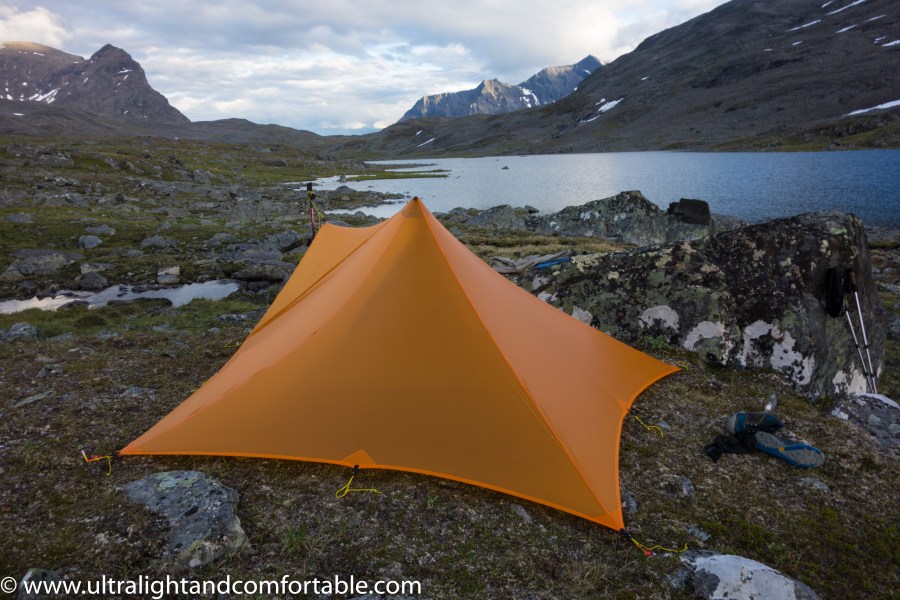
The Trailstar by the glacier river.

DSC06368
13 kilos for a 9 day trip – fully safe and secure with a fishing pole and satellite phone to boot. My packing is watertight, I’m set for far below zero temperatures if needed.

DSC06267DSC06388DSC06411DSC06541

Dinner!

DSC06478
Taking a coffee and candy break while drying out my shoes.

DSC06492
It looks like hell, but believe me, this is some of the best aspects of wearing trailshoes in the wild. When my feet get hot I can just go trudging through some cold water. No blisters, no pain, no problems! Trailshoes are a luxury few have yet discovered.

DSC06515

Down by Rapadalen – Amazing

DSC06546
If only Ron would let me sell his MLD gear! The yellow trailstar is probably the single most beautiful tent build today. An incredibly light and well performing piece of kit.

DSC06882
My Fizan poles and HMG windrider 4400 after a week in Sarek. Both performed incredibly well – so good in fact that I will be supplying both at backpackinglight.se. These are simply the best products available for their intended purpose.

backpackingblogDestinationsLandscape photographylaugavegur

Trip report: The Laugavegur trail day 4

Emstrur (Botnar) to Þórsmörk

— 15 km, estimated walking time 6-7 hrs, 300m net descent —

dsc07873

Again, I was left breathless by the amazing hike. Glaciers, desert, rivers, mountains and forest all within a 15 kilometer hike. This day starts off in the canyon of Syðri – Emstruá. Here there is a steep path that leads a bridge that runs over the glacier river.

dsc07895

There is something epic about a raging river being fed with a glacier.. simply amazing. I sat here for sometime and ate my breakfast and just enjoyed the incredible view, engrossing my soul completely in the moment.

dsc07894

I learned along this trail that it was time to replace my beloved Haglöfs LIM trail shoes. I decided from this moment on that I would wear trail shoes that had toe protection and better grip. On top of that I realized that I’m not really into video production.. I shot hours and hours of video along this trail and so far haven’t edited anything.. I prefer working with photography.

dsc07910-pano

After this long trek along the sandy, volcanic ash desert everything changes to a kind of mini forest.

dsc07932

dsc07949

This little house just seemed lost in the wilderness – It was the first house I’d seen for days.

dsc07951

The house from a little further out.

dsc07967

dsc07986

After a long walk came this amazing water crossing along the Þröngá river. As always the water is freezing cold, but barely knee high throughout so wading is no problem.

dsc07992
The little village at the bottom of the valley is Porsmork, while I will be staying in Bazar, I wanted to make the little 8 kilometer detour to Porsmork to drink beer and eat peanuts. It was worth the walk. You can even take the bus back to Reykjavik from Porsmork.


From Porsmork I made my way on to Bazar where I would be sleeping for the night.

dsc08015

While this was not Bazar, it was nice nonetheless.. Not really sure what this place was called, but it was nessled between Porsmork and Bazar.

dsc08023

After a quick walk over this glacier river, I soon arrived in Bazar where I would throw up my tent and make camp for the night

Once my tent was setup I made my way to the river, laid down and chilled out for a few hours before heading off to bed. Once again, the Laugavegur trail delivered on it’s incredible views and serene enviroment.

dsc08062

Trail report: the Laugavegur trail day 1
Trail report: the Laugavegur trail day 2
Trail report: the Laugavegur trail day 3
Trail report: the Laugavegur trail day 4
Trail report: the Laugavegur trail day 5

blogDestinationsLandscape photographylaugavegurultralight backpacking

Trip report: The Laugavegur trail day 3

Alftavatn to Emstrur (Botnar)

15 km, estimated walking time 6-7 hrs, 40 m net descent

I was in no rush to leave Alftavatn, the views were simply incredible and it was nice to just hang out for a while. I knew that walking through this valley would be an amazing adventure, and with that, I laced up my trail runners and made my way towards Emstrur.

dsc07717

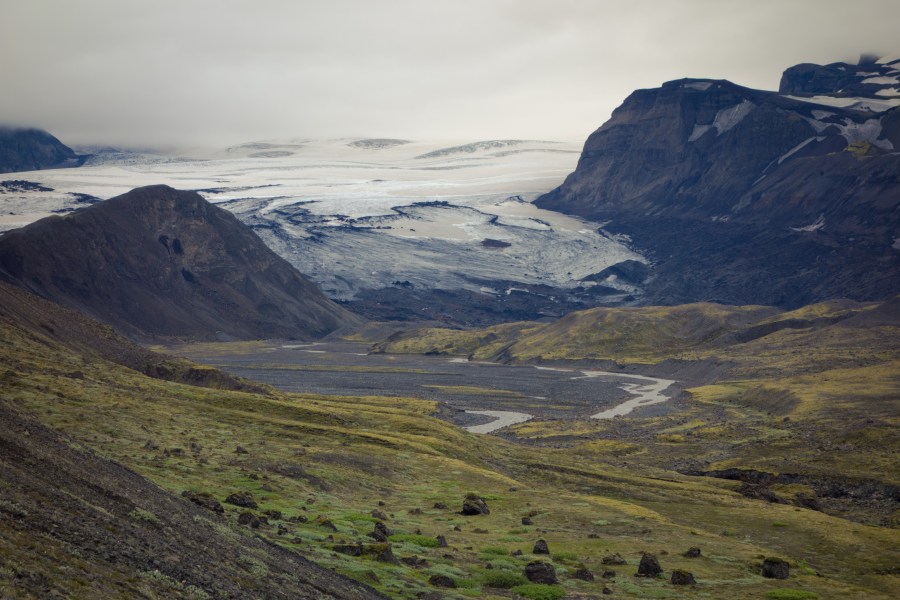
From the very start on the way to Emstrur, this incredible view is what I was met with. The hike from Alftavatn to Emstrur is by far the most picturesque of all the sections. From this kinds of green rolling landscapes, into long deserts of volcanic ash and a massive glacier looming in the distance like a constant reminder of the true wild that you are in.
This hike felt long, maybe it was the deep ash or the several large river crossings.. who knows, the hike is easy, but feels much longer than the 15km that it actually is.

dsc07722

The first real water crossing is about 3-4 kilometers from Alftavatn. Here I passed a whole group of heavy-miserables while they stopped to take of their boots and socks 🙂 I just trugded through, admittedly the water was cold but I warmed up quickly.

dsc07736

Here the trail takes us over the low ridge Brattháls into Hvanngil. If your looking to book a room in advance in Alftavatn and it’s fully booked (not unlikely). Check out Hvanngil, as it’s not always a known campground.

dsc07752

The first real river crossing is made on this part of the trail. It’s wide and irratic, you will have to walk around a while along the river Blafjallakvisl until you find a very wide part, and there crossing shouldn’t be a problem. You will notice however I stopped on a little sandbank in the river. I didn’t actually stop here to take a pic, to be honest I stopped here because my feet felt frozen solid from the ice cold water..

dsc07777

To say that the views along this part of the trail are amazing is an understatement. While I always find nature to be awe-inspiring, this particular part of the trail was something altogether different. I had the feeling of walking along the art gallery of god – his best pieces of art all laid out along a 15 mile trek. I took my time here, stopped often and forgot about everything else in the world, nothing mattered, I was lost in the moment and it was one of the greatest moments of my life.

dsc07787

dsc07788

dsc07798

After a while we come along the river Nyrðri Emstruá, which thankfully is bridged.. From here it’s only a few kilometers left before reaching the campground at Botnar.

dsc07773


DSC07809

After an incredible walk we come in towards Botnar which resides in the Markarfljótsgljúfur canyon with the glacier in the background.

dsc07818

The campground in Botnar is well protected from the heavy winds blowing down from the glacier. The views are incredible here and there is even a little shop here if you need some resuplies. 3G works perfectly fine along all the campgrounds throughout the Laugavegur trail – so calling home wont be a problem.


Trip report: laugavegur trail day 1
Trip report: laugavegur trail day 2
Trip report: laugavegur trail day 3
Trip report: laugavegur trail day 4
Trip report: laugavegur trail day 5

DestinationsLandscape photographylaugavegurPhotographyTrip report

Trip report: The Laugavegur trail day 2

When volcanic desert transforms into a true paradise on earth

Hrafntinnusker to Álftavatn – 12 kilometer from volcano to paradise

DSC07449.jpg

After a day and a half of hiking in rain and cold, finally some sunshine and water. I stopped here and filled up my water bottle, ate an energy bar and called home. This really lifted my spirits.

After what felt like an eternity of walking in rain and snow, after volcanic ash, rock and gravel. A long sleepless night in an unprotected snowy volcanic wasteland.

dsc07467

The Laugavegagur trail transformed itself into a true paradise on earth when I came up over the ridge and looked out upon Alftavatn.

dsc07478-pano

Alftavatn is where most pictures you see of the trail come from, and in the next section you will see why. However to get there you have to walk along a desert wasteland for almost the entirety of the 12 kilometers from Hraftinnusker.

dsc07497
My journey to Alftavatn started after a cold night of “sleep”. On top of that I of course only use trail running shoes. While this is normally never a problem, on this one occasion my feet where frozen until I got my temperature up as the first 5 kilometers of the trail was covered in mushy snow.

dsc07528
It took me about 6 hours to get to Alftavatn from Hraftinnusker, lets just say I was in no hurry at all. While it was cold, wet and at times just all around shitty, I actually enjoyed this part of the trail immensely; granted, more now when I’m sitting at home writing this book.

dsc07601

While the campground looked lovely, I opted for the cabin.. there was actually an available bed! The room here will cost about $50.00.. to me it was worth it that night.

dsc07543

Trip report: The Laugavegur trail day 1
Trip report: The Laugavegur trail day 2
Trip report: The Laugavegur trail day 3
Trip report: The Laugavegur trail day 4
Trip report: The Laugavegur trail day 5